

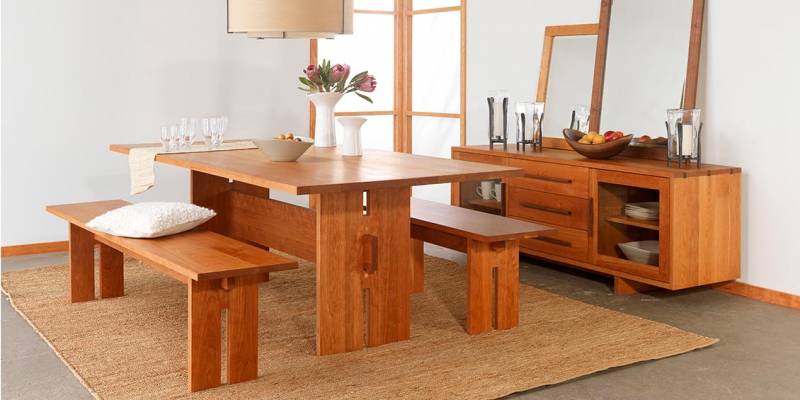

At Vermont Woods Studios, we’re all about furnishings that stands the check of time—crafted sustainably, domestically, and with function. That’s why it’s vital to know the distinction between “trendy” and “modern” design. Although the phrases are sometimes used interchangeably, they really mirror two very distinct views on fashion and type.
We like to consider the distinction between trendy and modern design as follows: trendy design won’t ever change, whereas modern design is all the time being redefined.

What’s Fashionable Design?
 Fashionable design refers to aesthetic actions from the early to mid-Twentieth century, particularly Artwork Deco and Mid-Century Fashionable. Suppose clear strains, minimalist silhouettes, and an emphasis on operate. Supplies like wooden, leather-based, and stone are widespread, typically complemented by earthy tones—brown, olive, and rust—although daring accents might add curiosity. In the present day, trendy design endures as a result of its readability and function proceed to resonate.
Mid-Century Fashionable Design Traits

Mid-Century Fashionable design was Influenced by Danish Modernism and Bauhaus. It peaked within the Fifties and Nineteen Sixties—therefore its identify.
- Minimalist designs with a heat aesthetic
- Natural shapes typically with softer curves and refined strains
- Wooden is the commonest materials
- Makes use of neutrals and choose daring colours as accents
- Makes use of the philosophy, “Type follows operate.”
What’s Submit-Modernism? A Bridge Between Fashionable and Modern
Submit-modernism dominated within the Seventies and Nineteen Eighties, and it was not like any design fashion that got here earlier than it. Though trendy fashion is alleged to have paved the way in which for post-modernism, they’re worlds aside.
For instance, whereas Mid-Century Fashionable typically strategically makes use of daring pops of coloration, post-modernism doesn’t hassle. And the practicality of valuing operate that trendy design is so well-known for? Submit-modernism takes the alternative strategy.
Modern Design Historical past
 Modern design is dynamic—it evolves with the occasions. Rising within the Seventies, modern tendencies have a tendency towards impartial palettes—assume whites, blacks, grays—with occasional pops of brilliant accent colours. It typically incorporates trendy supplies like glass, metallic, and concrete and values type simply as a lot as operate, making it an ever-adaptable strategy.
Fashionable vs. Modern
Fashionable design is grounded in pure supplies and a heat, earthy palette—woods, leathers, and tender impartial tones like browns, olives, and rusts. It’s rooted in mid-Twentieth century aesthetics, significantly the Mid-Century Fashionable and Artwork Deco actions, and emphasizes clear strains and purposeful simplicity.
Modern design, then again, is ever-evolving. It embraces glossy supplies like glass, metallic, and concrete, and sometimes encompasses a extra restrained, monochromatic palette—whites, blacks, and grays—accented by occasional daring pops of coloration.
Whereas each types share a love for minimalism and clear geometry, trendy design stays constant and traditionally anchored, whereas modern design adapts to mirror the fashion and temper of the current second.
Why the Distinction between Fashionable and Modern Issues to Us
At Vermont Woods Studios, these distinctions mirror our dedication to mixing timeless craftsmanship (trendy design) with related, considerate styling (modern design). We imagine furnishings ought to be each enduring and acceptable for right this moment’s residing areas.
By working with native Vermont artisans and responsibly sourced hardwoods, we provide items that really feel rooted in basic design traditions but look completely at residence now and into the longer term.
Able to discover your fashion? Uncover furnishings that balances lasting high quality and present fashion—crafted with care, function, and sustainability.

