

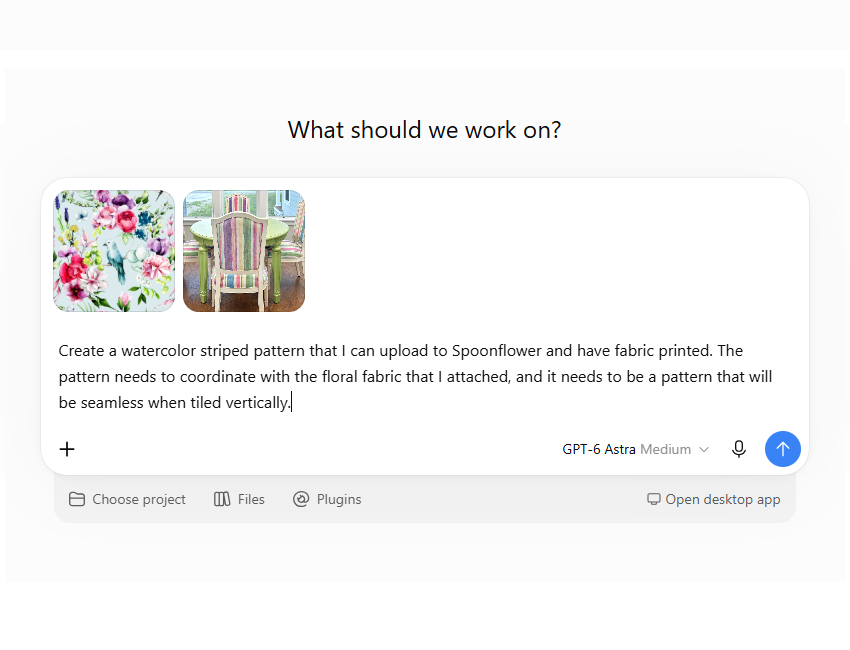

Effectively, I believed I used to be executed speaking concerning the striped material sample, however I had a number of folks ask for extra data on how I made the repeatable, seamless material sample utilizing AI, and particularly, utilizing ChatGPT. So I needed to provide extra particulars on the method from begin to end.
To be clear, I solely used ChatGPT to make the unique sample that I used as a leaping off level, however then I used a photograph modifying software program to edit colours, rearrange the stripes, delete stripes, and so forth. So ChatGPT obtained the method began for me, however I did all the tremendous tuning myself. However extra on that in a bit.
The explanation I began the method on ChatGPT is as a result of I needed a watercolor striped sample. Whereas I can do floral patterns from begin to end utilizing my photograph modifying software program, this system I exploit is restricted in relation to making textures. So ChatGPT had to do this half for me.
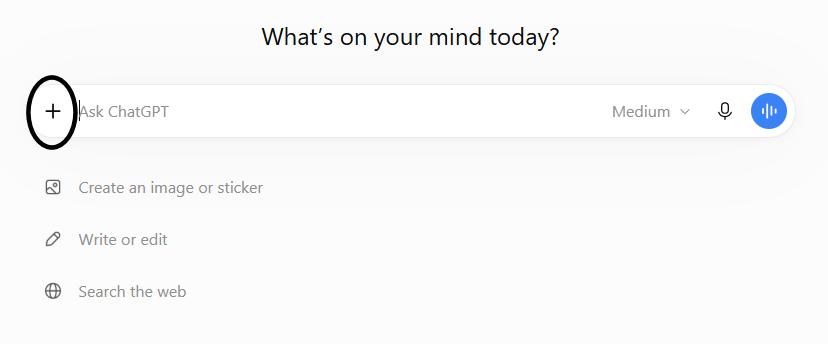
To start out the method, I uploaded two footage to ChatGPT. To add footage to ChatGPT, you merely click on on this plus image on the left of the enter area.
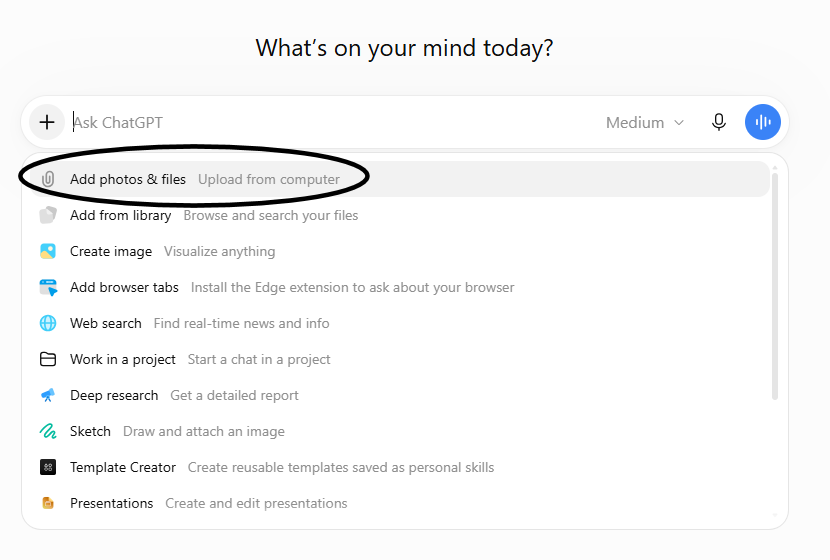
And within the dropdown choices, click on the primary choice. You possibly can repeat this till you have got all your footage uploaded.
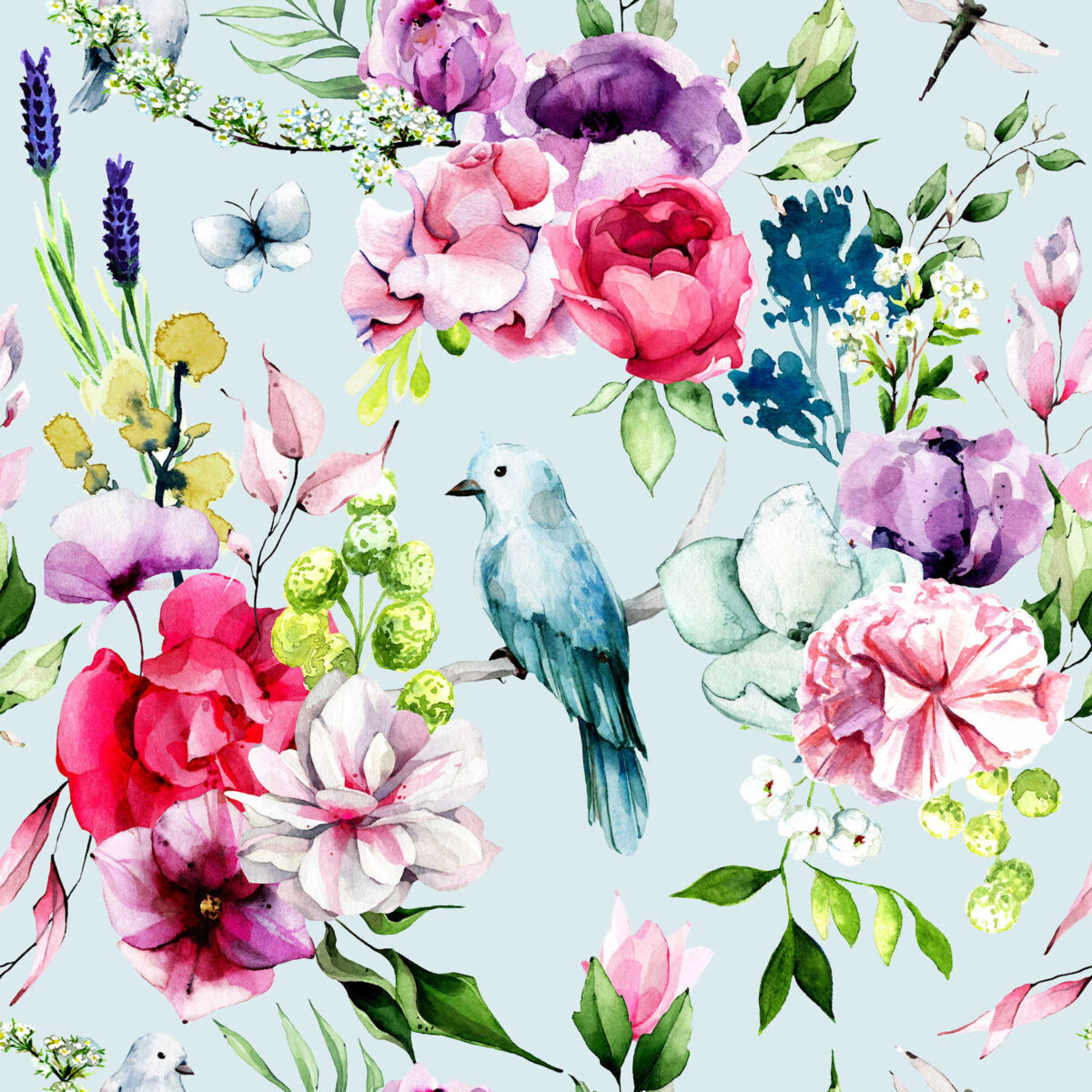
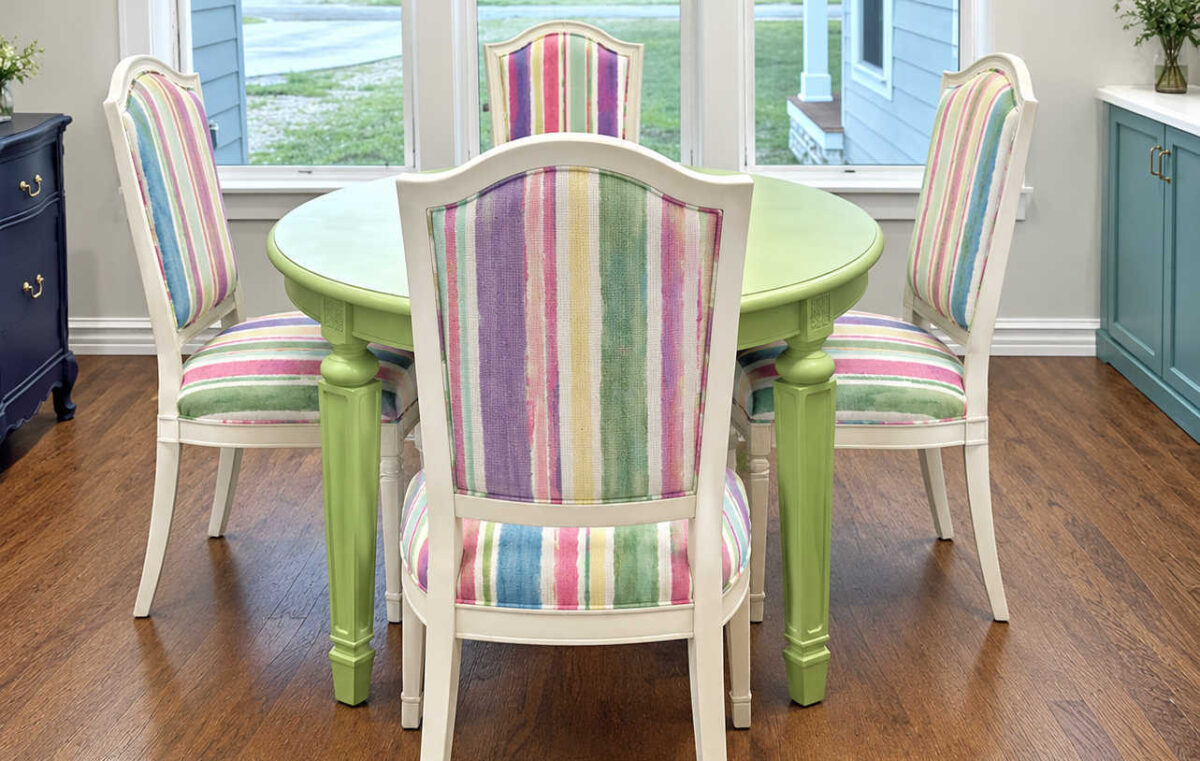
I uploaded two footage — the total picture of my floral material displaying one full repeat of the sample, and the pattern of a watercolor sample that my mother despatched to me. My mother had despatched me three totally different choices, however I selected this picture particularly as a result of the total picture additionally confirmed my darkish purple buffet and teal kitchen cupboards, though these issues are lower off within the picture show proven right here.
With my photographs uploaded, I entered my very clear (and possibly overly descriptive) immediate. You’ll discover within the immediate that I really give hex codes (the # signal adopted by a six-digit code) for paint colours. I didn’t provide you with these myself. I merely Googled the paint names (i.e., Behr Polar Bear) and Google’s AI gave me the hex codes for the paint colours. So this was my full immediate:
Create a sample that I can use on material with the next parameters:
- 1. It must coordinate with the floral/chook material sample that I connected.
- 2. I actually just like the randomness of the striped material on the chair within the second image closest the “digicam”. I just like the design on the seat again in addition to the seat on that chair.
- 3. The background must match Behr Polar Bear #F5F4EC
- 4. Along with the material material that I connected, it additionally must coordinate with the kitchen cupboards which might be seen on the suitable aspect of the second image, that are painted Behr Hallowed Hush #6D9090. The colour you employ doesn’t have to match that coloration completely, but it surely does have to coordinate so there’s a nod to the kitchen cupboards within the material.
- 5. The horizontal repeat of the material must be about 14 inches broad.
- 6. The striped sample must be created in order that it may be tiled vertically to create a seamless sample.
- 7. I need lengthy, tender, watercolor strokes with out plenty of coloration variation inside every stripe. I do like some coloration variation so long as it seems to be tender and like watercolor.
- 8. The general look I’m going for is that random width, freeform look of the material on the again of the chair within the second image.
- 9. General, I just like the softer look of the material on the chair, so the colours don’t have to match the floral material material completely, but it surely must coordinate.
And about 60 second later, that is the sample it gave me. This might be one full repeat of the sample, so you may see that it will tile seamlessly when repeated vertically, but it surely additionally lower the pink stripe in half vertically in order that it’s seamless when tiled horizontally.
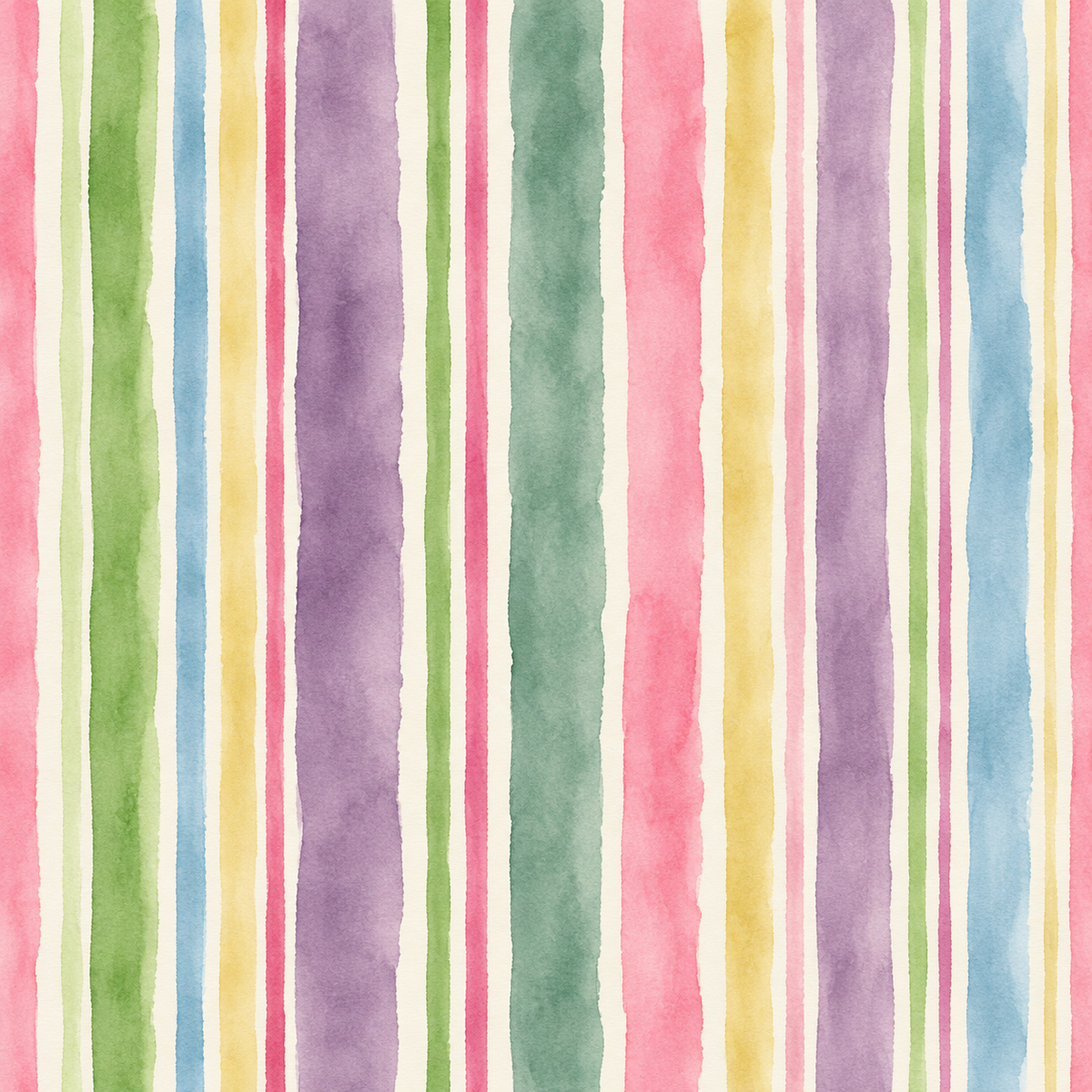
This was an important begin, but it surely wasn’t precisely what I needed. However ChatGPT gave me crucial parts — watercolor stripes, loads of colours to work with, and stripes that can tile seamlessly when repeated vertically.
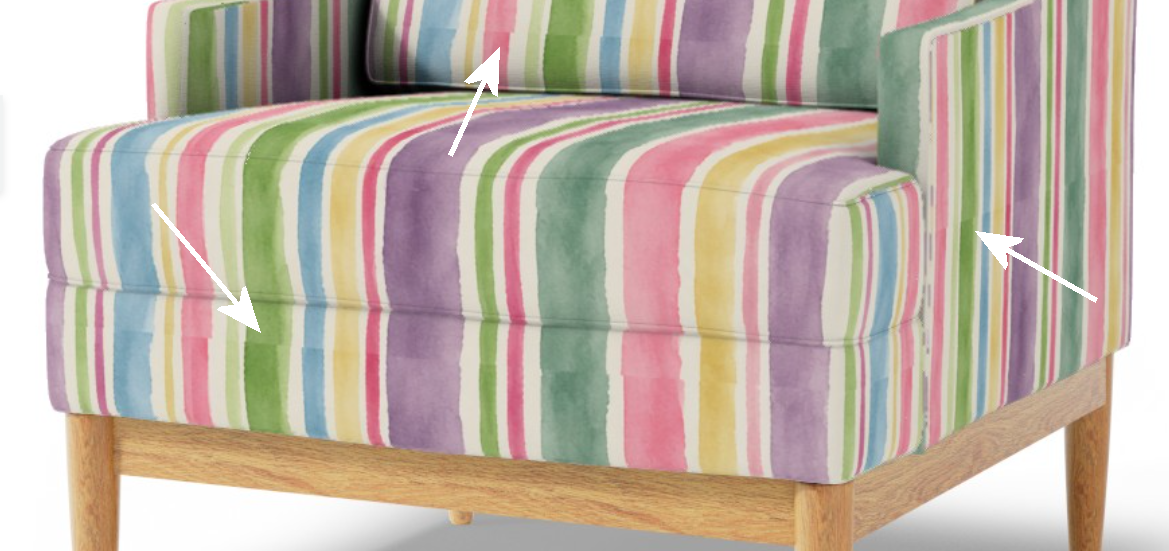
And that final one is the important thing to creating a cloth or wallpaper sample. When creating material or wallpaper, your sample has to have the ability to tile each horizontally and vertically in order that it’s seamless. In case your sample gained’t tile seamlessly, it would look low cost and amateurish. For instance, right here’s what this watercolor material would appear like if the sample isn’t seamless. Whereas it’s not as pronounced on a freeform watercolor sample, you may nonetheless see very particular horizontal traces throughout the material the place the sample stops and begins. And that’s precisely what you wish to keep away from when creating a cloth or wallpaper sample.
So ChatGPT took care of crucial parts for me. I may have continued making edits to the sample with extra prompts to tweak the design, and I’m certain I may have finally gotten to the ultimate end result I needed. However fairly than utilizing ChatGPT for the remaining, I made a decision to obtain that picture, open it up in my photograph modifying program (I exploit PaintShop Professional, however you may as well use one thing like Adobe Photoshop for this) to proceed my edits.
For instance, if I needed to take away a stripe utterly, I used the choice device on the left that appears like a sq. with dotted traces round it…
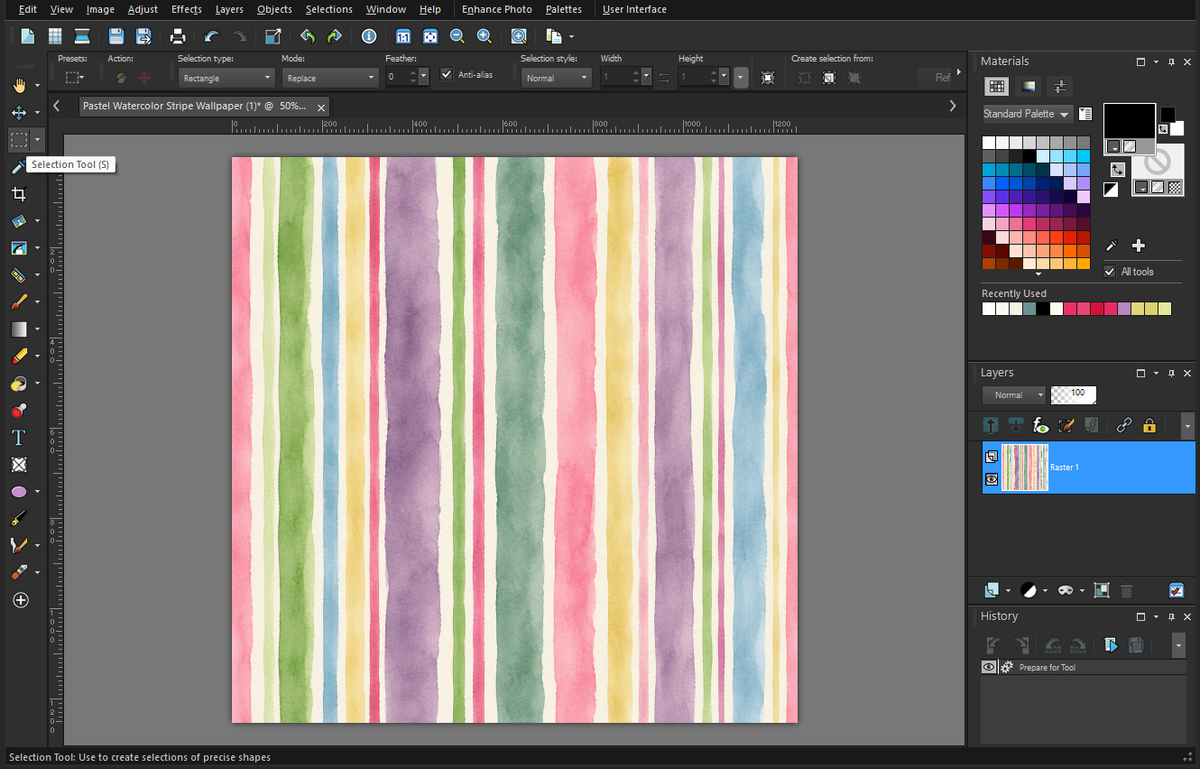
And I chosen the striped that I needed to take away, just like the slim inexperienced and pink stripes subsequent to one another. The bottom line is that you must choose the complete stripes, from high to backside, with out leaving any remnants of these stripes exterior of the dotted traces displaying the world you chose.
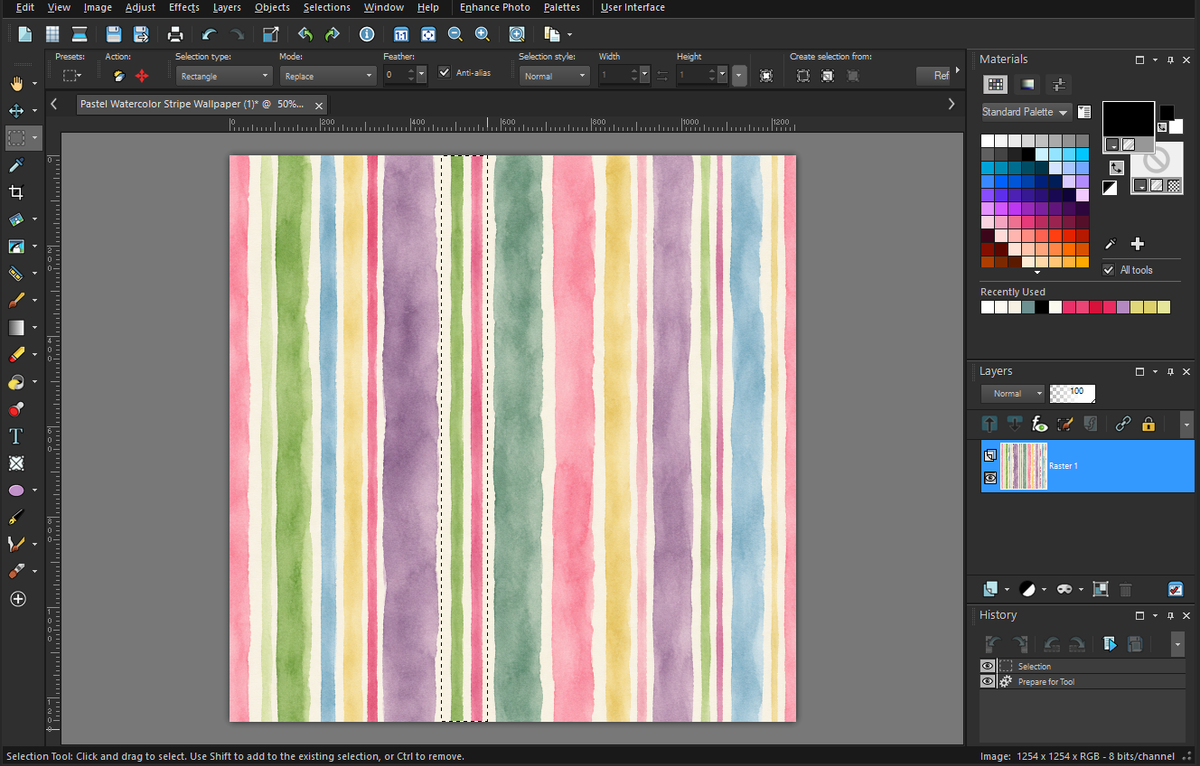
After which I merely clicked the delete button on my keyboard, and people stripes disappeared, forsaking a clear background.
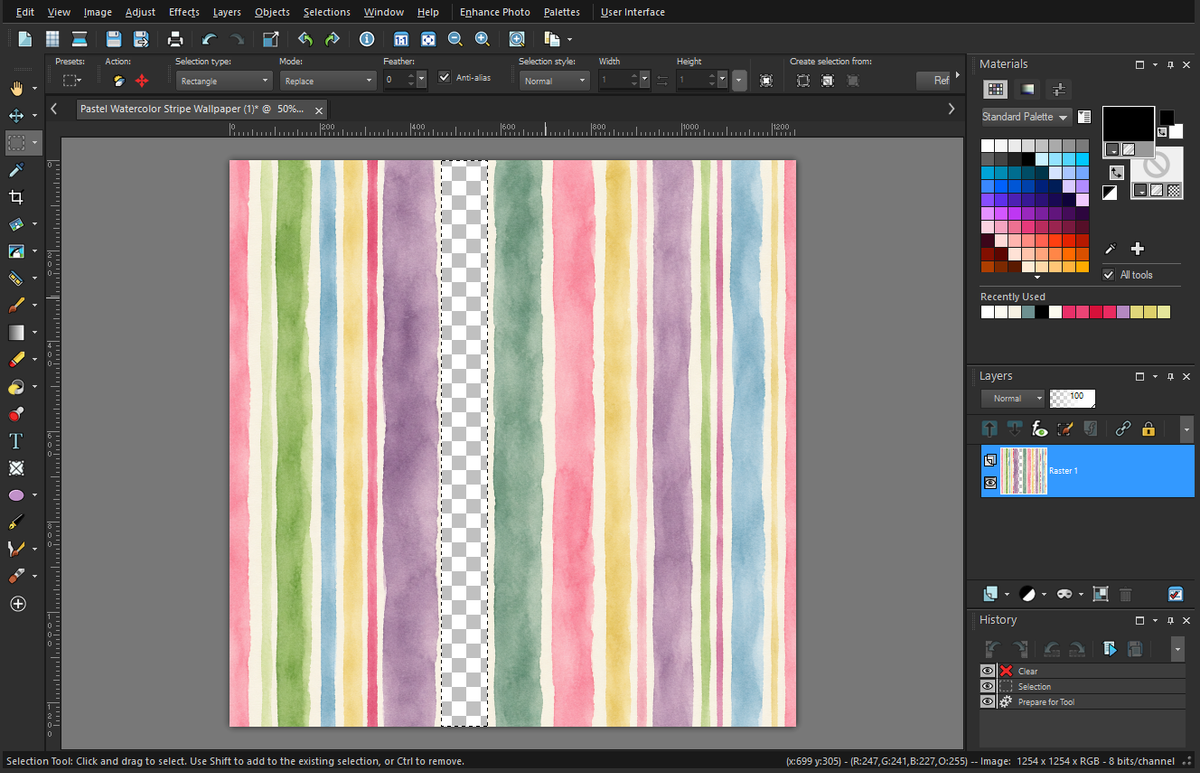
After which I chosen the “flood fill” device on the left aspect that appears like a paint bucket that’s tipped over with paint spilling out, and with that space nonetheless chosen (i.e., it nonetheless has the dotted traces round it)…
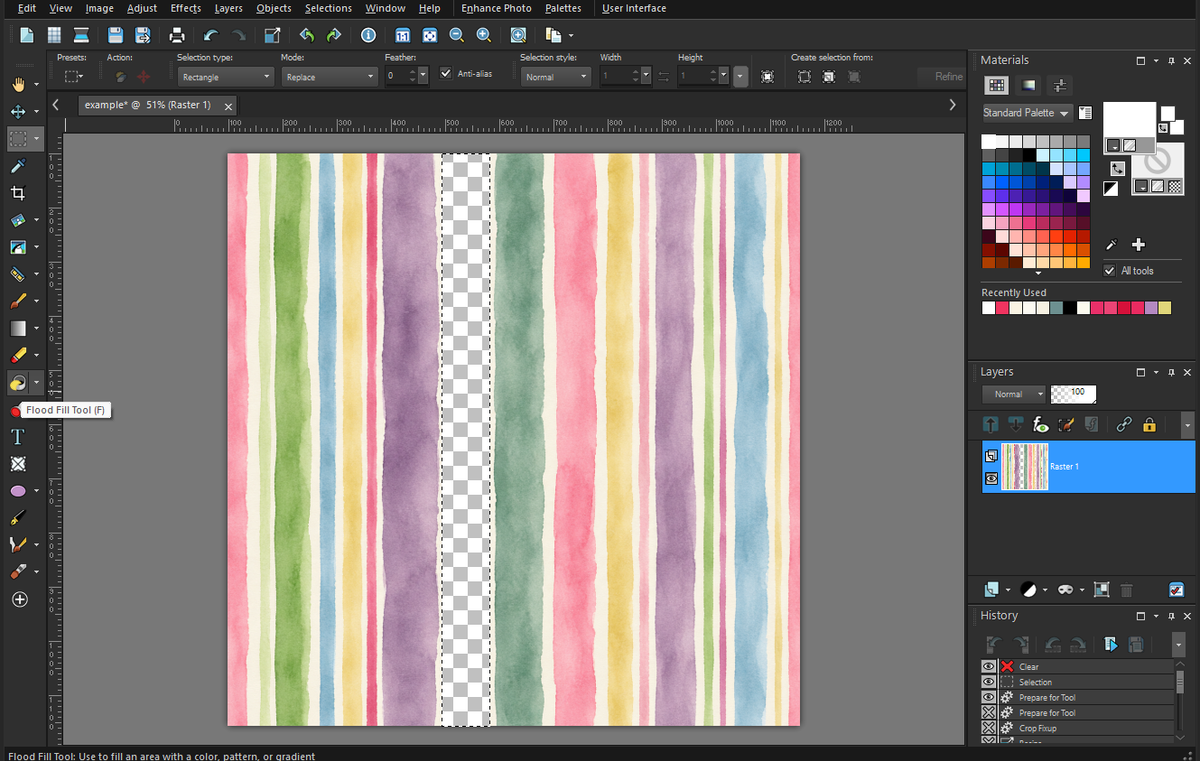
I used the “flood fill” to fill in that space with the stable background coloration.
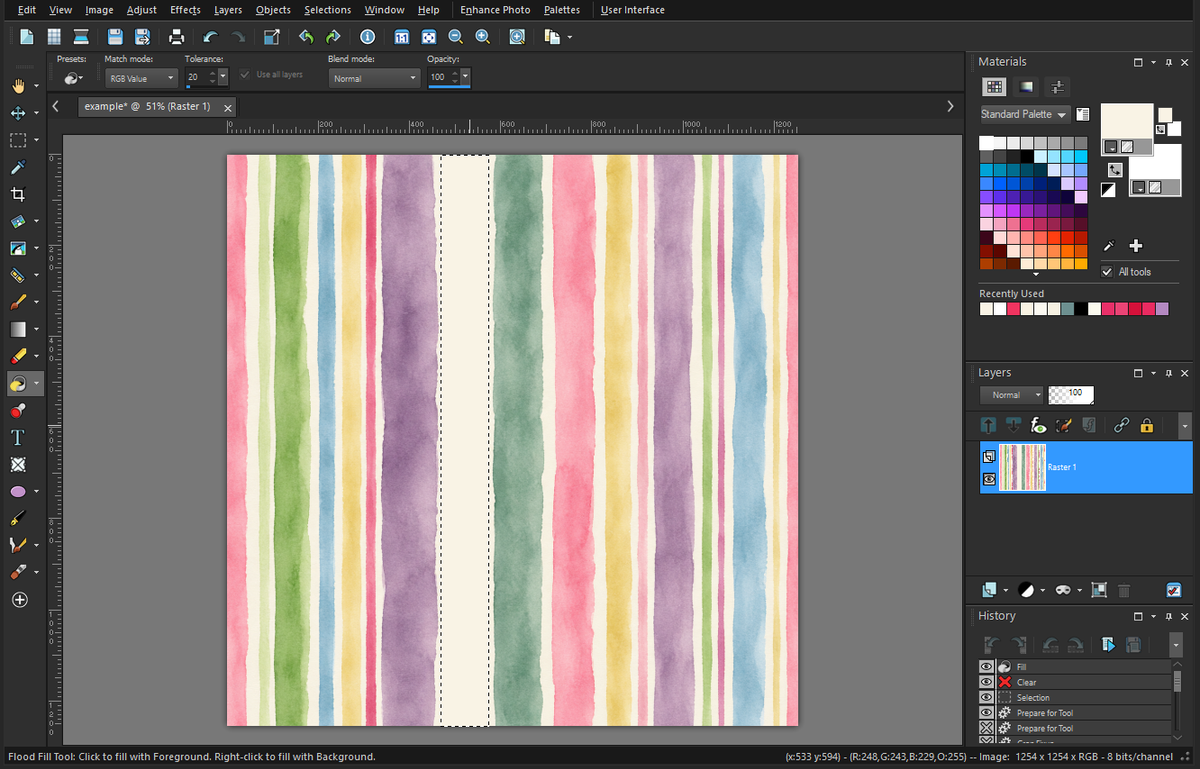
After which I selected “choices” from the highest menu to unselect (“choose none”) that space in order that I may transfer on to a different stripe.
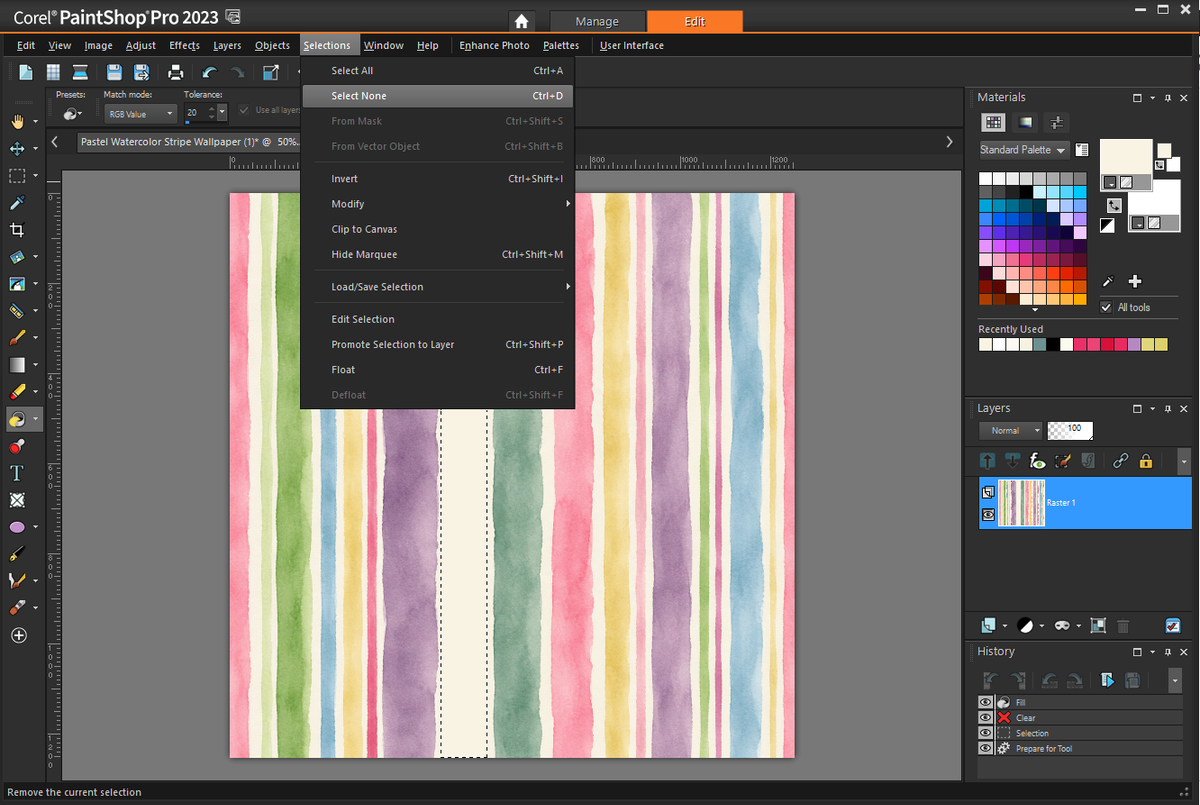
Anyway, I don’t wish to flip this into a complete PaintShop Professional tutorial since that will be extremely tedious and boring, however the level is that I solely wanted ChatGPT to create that first picture for me since I didn’t have the power to do seamless watercolor stripes. So as soon as it took care of that course of for me, I may simply use my photograph modifying software program to rearrange the stripes, widen stripes, take away stripes, and even darken/lighten the stripes and the background as wanted.
If you happen to’ve by no means used a photograph modifying software program like PaintShop Professional or Photoshop, and it appears overly tough and intimidating to you, I can assure that you’ll find your reply to “How do I….?” for any query you might need on YouTube. There are intensive tutorials there for each of PaintShop Professional and Photoshop, and also you’ll get the fundamentals down very quickly. And naturally, in case you don’t wish to use a photograph editor, you may at all times do the entire course of from begin to end on ChatGPT with extra exact prompts (e.g., “take away all the slim stripes”, “make the purple stripe wider and about 25% lighter”, “swap the location of the broad darkish inexperienced and broad purple stripes”, and so forth.) and it might do the entire thing for you. I’m just a bit too impartial and impatient for that, so I selected to be extra hands-on with the remainder of the method.
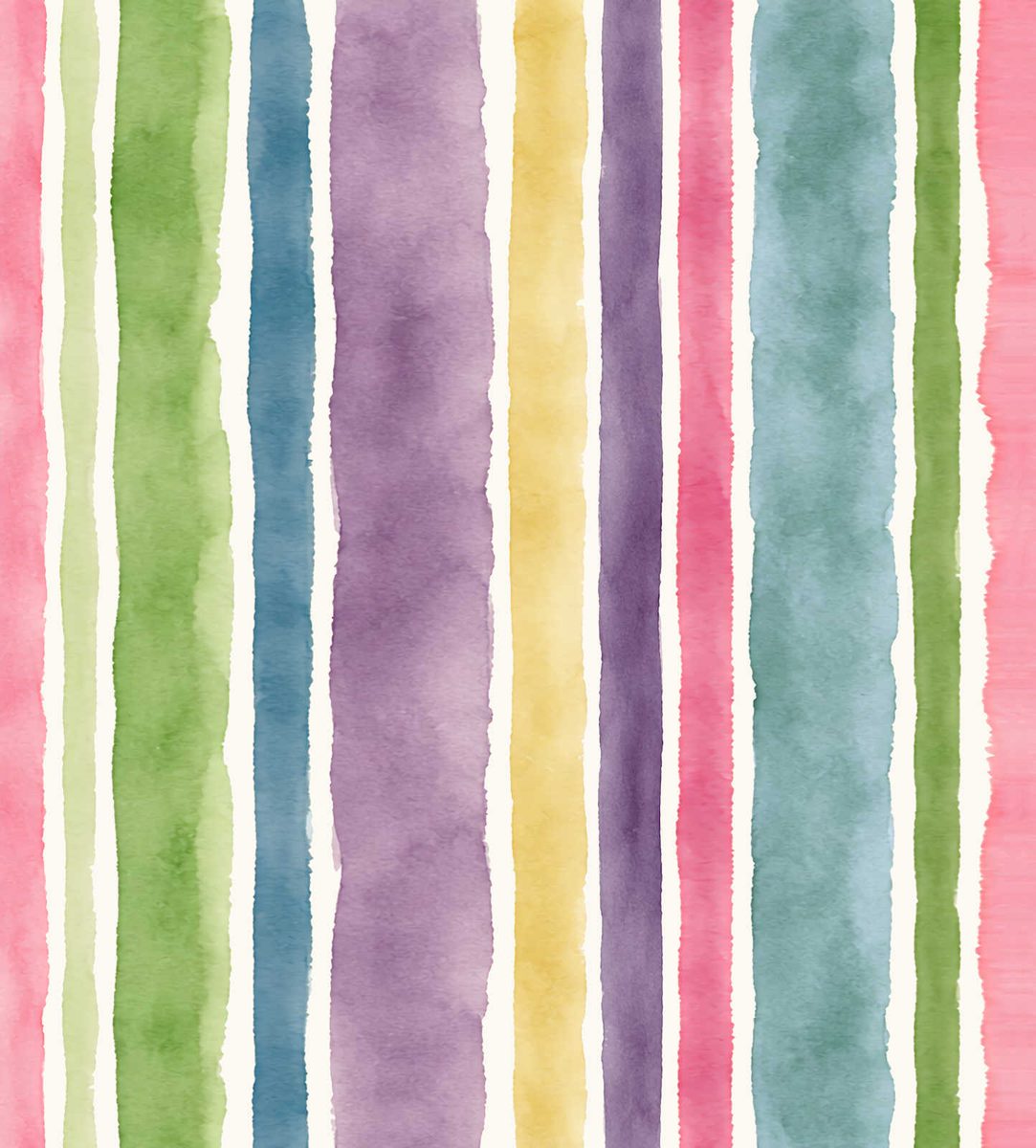
In order that’s how I used a mixture of ChatGPT and PaintShop Professional to create a seamless watercolor stripe sample that I may then add to Spoonflower to have a customized material printed for my eating room chairs. And in spite of everything of my tweaking and modifying, that’s how I went from that unique ChatGPT watercolor stripe to the one I lastly uploaded to Spoonflower to have printed.
I’ve created loads of repeatable patterns previously with out utilizing AI and solely utilizing PaintShop Professional. Once more, I solely wanted ChatGPT for this one as a result of PaintShop Professional is restricted in creating textures like fairly watercolors. However when making floral patterns, I don’t want AI.
I’m telling you, there are such a lot of choices for getting a customized search for your property in relation to wallpaper and material, and none of those choices require plenty of inventive potential. It’s only a matter of understanding the look you’re going for (summary, watercolor, stripes, floral) after which studying a number of primary ideas about the right way to flip these into repeatable patterns, together with studying a number of expertise utilizing the photograph modifying software program of your alternative. There’s a little bit of a studying curve, however after you have the fundamentals down, you’ll be in your option to a custom-made residence that appears like nobody else’s (except, after all, you begin promoting your designs 😀 ).

Addicted 2 Adorning is the place I share my DIY and adorning journey as I rework and enhance the 1948 fixer higher that my husband, Matt, and I purchased in 2013. Matt has M.S. and is unable to do bodily work, so I do the vast majority of the work on the home on my own. You possibly can be taught extra about me right here.

