




For those who’ve ever browsed on-line, you’ve probably seen an HTTP standing code at one level or one other. Does a 404 ‘web page not discovered’ message appear acquainted? That is an HTTP standing code, and a standard one at that.
There are totally different standing codes to suggest totally different errors, so that you’ll know precisely what’s incorrect once you see one – that’s should you’re conversant in them! We’ll be sure you are by the top of this information.
What are HTTP standing codes?
HTTP standing codes, or error codes, are responses out of your net server to your browser request. Basically, once you go to a web site, your browser sends a request to that website’s server. Generally, these requests are fulfilled seamlessly, and different occasions, an error happens. HTTP standing codes are messages letting you understand how issues went and are helpful in figuring out the issue if a request has failed.
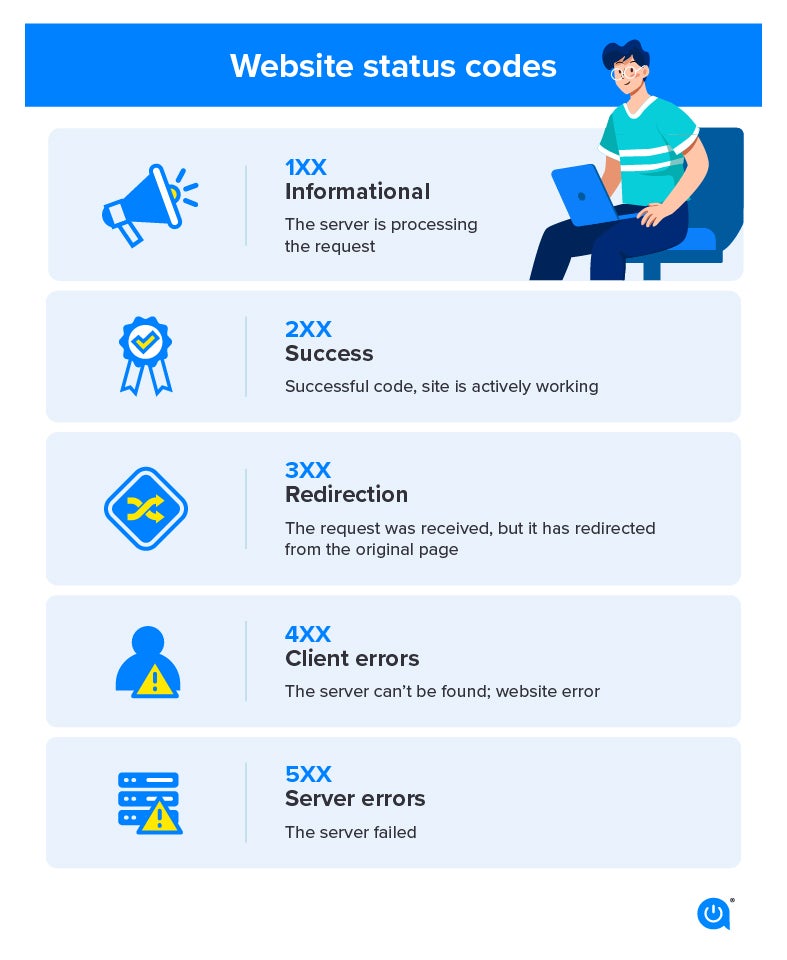
Standing code lessons
HTTP standing codes are divided into totally different lessons to assist differentiate their meanings, and the primary digit of the code signifies every class. These lessons may help to establish the final nature of the standing code earlier than you identify what a person code really means. The 5 standing code lessons embody:
- 1xx – Any code beginning with a 1 has to do with an informational response, or relatively, the server remains to be processing the browser request.
- 2xx – The 200-level standing code class refers to a profitable request. The browser request was efficiently accomplished and the server gave the browser the anticipated response.
- 3xx – This class entails a redirection code. Your request was acquired, however you bought redirected to a unique supply.
- 4xx – The 400-level standing class refers to a client-side error. This implies there was an issue on the web site’s aspect of communication, and normally seems when a web page isn’t legitimate or not discovered (like a 404 error).
- 5xx – That is the standing code class for server-side errors. The request was legitimate, however the server failed to finish it.
Now that you just perceive the standing code lessons, let’s go over a few of the commonest standing codes that you could be encounter.
Widespread standing codes
Listed here are a few of the commonest standing codes that you could have seen, what they imply and how one can troubleshoot them in the event that they forestall you from reaching your required net web page:
200 – OK
This standing code means the whole lot is working because it ought to between the server and the browser.
301 – Everlasting redirect
This code signifies a everlasting redirect. When a web page or useful resource has been completely changed with a unique useful resource, any guests or bots that land on this web page shall be redirected to the brand new URL.
302 – Short-term redirect
Just like a 301, a 302 momentary redirect standing code means guests are handed alongside to a brand new web page, however the brand new location isn’t everlasting. There’s additionally no troubleshooting essential for this standing code.
403 – Forbidden
The 403 forbidden error standing code seems when a person tries to entry a useful resource they don’t have permission to view. Widespread causes embody privateness limits, permission necessities, geographical restrictions or safety points (firewalls, prohibited IP addresses).
404 – Web page not discovered
A 404 web page not discovered error is a standard standing code indicating the web page the browser is requesting was not discovered by the server. For those who kind in a URL that doesn’t exist, you’ll get a 404.
410 – Gone
A 410 implies that a web page is not accessible in any respect, and is extra everlasting than a 404.
500 – Inside server error
A 500 inner server error signifies an issue with the server. This implies one thing went incorrect on the server aspect and the request was not delivered.
502 – Dangerous gateway
A 502 dangerous gateway error implies that there was a communication error between servers, like when a proxy server is in use.
503 – Service unavailable
A 503 service unavailable error signifies that the server is operating correctly, not like a 500, however it’s briefly out of fee. This error is frequent when servers are present process upkeep or overloaded attributable to elevated visitors.
inform if the difficulty is you or the web site
Your browser is attempting to let you know one thing with these error codes — the bottom line is realizing what it’s saying. Use this fast information to decode the commonest error messages and decide if the repair is inside your management.
✅ Fixable – 400 Dangerous Request: Examine that you just entered the URL accurately
❓ Normally fixable – 401 Unauthorized: Create a person account to bypass this error
✅ Fixable – 403 Forbidden: Clear your cache and logout of your VPN
⛔ Not fixable – 404 Not Discovered: The positioning or web page not exists
❓Normally fixable – 408 Request Timeout: Clear cache; wait a couple of minutes earlier than attempting once more
Curious for extra? Discover out repair a 500 Inside Server Error or view a full record of error codes.
Record of all standing codes
Discover over 60 totally different HTTP standing codes beneath every class beneath.
1xx class standing codes
2xx class standing codes
3xx class standing codes
4xx class standing codes
5xx class standing codes
Troubleshooting frequent HTTP standing codes
For those who get an HTTP standing code, there are some things you are able to do to attempt to repair it.
For a 403 forbidden code:
- Double-check your URL
- Clear your browser cache and cookies
- Contact your web service supplier
- Disable your VPN if in case you have one operating
Be taught extra about troubleshooting a 403 forbidden error.
For a 404 web page not discovered code:
- Examine your URL for typos
- Refresh the web page
- Clear your browser cache
- Contact the corporate, service or group instantly
Be taught extra about troubleshooting a 404 standing code.
For a 500 inner server error code:
- Clear your cache and browser historical past, then refresh the web page
- Give it a while and are available again later
- Contact the location proprietor
Be taught extra about troubleshooting a 500 inner server error.
For a 502 dangerous gateway code:
- Begin a brand new looking session
- Refresh the web page
- Restart your gear
- Change your DNS server
- Contact the online administrator or your ISP
Be taught extra about troubleshooting a 502 dangerous gateway standing code.
For a 503 service unavailable code:
- Refresh the web page
- Restart your machine
- Give it a while
- Contact the web site proprietor or administrator
Be taught extra about troubleshooting a 503 service unavailable standing code.
Finest practices for dealing with HTTP standing codes
If in case you have your individual web site, it’s crucial to grasp and handle HTTP standing codes to make sure a great person expertise and efficiency.
HTTP standing codes are vital from the online admin aspect as a result of they primarily let you know what goes incorrect. An everyday person may even see an error and perceive what it means at finest, however an internet developer or administrator has the ability to decide on acceptable standing codes for sure conditions and repair errors on their aspect of issues. Apart from realizing what all the codes imply, listed below are another finest practices in case you are a web site proprietor or developer:
- Select acceptable standing codes
- Use redirection codes appropriately
- Preserve delicate information safe
HTTP standing codes FAQs
What’s an HTTP standing code?

An HTTP standing or error code is a message {that a} web site’s server sends to a browser to point whether or not the request might be fulfilled. Consider an HTTP standing code as a dialog between a server and browser. If one thing goes incorrect, this code signifies the character of the issue.
How do I repair HTTP standing codes?
In case you are seeing a standing code when attempting to entry an internet web page, you possibly can attempt to clear your cache and browser historical past, refresh the web page, restart your machine or contact the web site proprietor. Generally although, there’s nothing you are able to do.

Written by
Camryn Smith
Author II
As considered one of Allconnect’s writers, Camryn Smith helps shoppers navigate advanced residence web servic… View profile

Edited by
Robin Layton
Senior Editor, Broadband Content material
Robin Layton is a Senior Editor for Allconnect, devoted to serving to shoppers navigate the often-co… View profile

